~ Adjunction = adjunct collection. Collected on OneTab through October 13, 2015: adjunction Oct2015 #2, 13 links, saved to Diigo and rss reader, posted to the Precarious Faculty online Reading Room. Focus includes academic labor, workplace, media, actions, adjunct stories.
Showing posts with label Reading Room. Show all posts
Showing posts with label Reading Room. Show all posts
Thursday, October 15, 2015
#adjunct/ion Oct2015 #2, 13 links
~ Adjunction = adjunct collection. Collected on OneTab through October 13, 2015: adjunction Oct2015 #2, 13 links, saved to Diigo and rss reader, posted to the Precarious Faculty online Reading Room. Focus includes academic labor, workplace, media, actions, adjunct stories.


Sunday, November 2, 2014
#Adjunct Reading Room: The #Precariat by @GuyStanding
 …at a price any adjunct can manage, in case I don't come up with a movie before midnight...lagniappe if I do.
The Precariat - The New Dangerous Class, a Bloomsbury Open Access book from Bloomsbury Collections, is available in HTML full text for online reading, with page image PDFs for printing or offline reading (licensed by Creative Commons)
Neo-liberal policies and institutional changes have produced a huge and growing number of people with sufficiently common experiences to be called an emerging class. In this book Guy Standing introduces what he calls the Precariat - a growing number of people across the world living and working precariously, usually in a series of short-term jobs, without recourse to stable occupational identities or careers, stable social protection or protective regulations relevant to them. They include migrants, but also locals.
Standing argues that this class of people could produce new instabilities in society. They are increasingly frustrated and dangerous because they have no voice, and hence they are vulnerable to the siren calls of extreme political parties. He outlines a new kind of good society, with more people actively involved in civil society and the precariat re-engaged. He goes on to consider one way to a new better society -- an unconditional basic income for everyone, contributed by the state, which could be topped up through earned incomes.
This is a topical, and a radical book, which will appeal to a broad market concerned by the increasing problems of labour insecurity and civic disengagement.
More information at Bloomsbury Collections - The Precariat - The New Dangerous Class
Monday, September 15, 2014
who needs a liberal education?

Eric Hartman (Kansas State) and Antoinette Hertel (St. Joseph’s): Clearer Thinkers, Better People? Unpacking Assumptions in Liberal Education. Who needs a liberal education? Gilbert Meilaender on why we should stop pretending that the liberal arts are important frosting on the cake of an education that is in fact designed for other purposes.
An excerpt from Beyond the University: Why Liberal Education Matters by Michael Roth. Why Scott Samuelson teaches Plato to plumbers: Liberal arts and the humanities aren't just for the elite. The humanities aren't obscure, arcane or irrelevant — they awaken our souls, influence how we think about inequality, and help us adapt to a changing world.re-blogged from who needs a liberal education? - bookforum.com / omnivore ~ head on over and read the rest there
Wednesday, August 13, 2014
American Anxieties…not just for #adjunct faculty
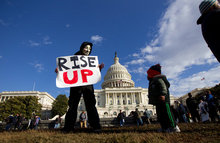
…COCAL XI and NatGat2014 exuberance not withstanding, malaise and a sense of foreboding abound, face us around every corenr. The feeling is neither exclusively American nor academic, adj-l listserv fretting to the contrary. Just listen to the world news. We --- and our institutions -- are embedded in the world and of it…more than just August doldrums. So here's a bit of a wallow before getting on with coping, rising up and doing.
From Aspeers, a special issue on American anxieties. Kathleen Geier on inequality, the flavor of the month. David Atkins on the four basic American reactions to record inequality....The over-policing of America: Chase Madar on how police overkill has entered the DNA of social policy. Have we all turned into a bunch of wusses? Kevin Michael Klipfel wonders. From The American Interest, John Allen Gay on the crumbling cultural foundations of American democracy: Democracy rests on a complex set of values — and many of those values are fading.
Is modern culture making us crazier? Martha Stout on the science behind America's deepening disturbance....Why the doom and gloom, America? Today’s crises are no worse than many in U.S. history. Jonathan Chait writes in defense of American optimism.Read the complete american anxieties at bookforum.com's omnivore. PS posts on conference, gathering and more are waiting in the wings...and the listserv is posting
Thursday, August 7, 2014
Reading Room: #futurelabor when #robots take our jobs

…could be worse than the #adjunct kind we have now. An even more recent Pew report, The Future of Jobs, is referenced in Will Oremus' Slate piece, The New Luddites.. The subtitle "What if technological innovation is a job-killer after all?" is straight from PEW. Jonathon Rees has busy setting up and migrating content to More or Less Bunk's new domain, getting ready for the Colorado AAUP Conference meeting in Durango and prepping a class digital history project to chase MOOCs (he'll be back). Somebody's got to pick up the slack on the bot beat, so here goes ~ with more than a little help from Ominvore's robots/jobs post
From the Journal of Evolution and Technology, a special section on technological unemployment and the basic income guarantee, including Riccardo Campa (Jagiellonian): Technological Growth and Unemployment: A Global Scenario Analysis; John Danaher (Keele): Sex Work, Technological Unemployment and the Basic Income Guarantee; and Gary E. Marchant, Yvonne A. Stevens and James M. Hennessy (ASU): Technology, Unemployment and Policy Options: Navigating the Transition to a Better World.
Thursday, July 31, 2014
Reading Room: the fault lines of american #highered « #Omnivore @bookforum
…another outstanding Omnivore collection of briefly annotated higher education links that I could not decide where to trim so kept them all. All of the topics are familiar and a number of the links will be too, but there are also links I don't recall seeing shared around the adjunct corner of social media. The first chunk is admin related; the next, institution and profession; and the final two about, adjuncts, grad school, academic labor and the job market.
 From the New York Times Magazine, Michael Sokolove on the trials of Graham Spanier, Penn State’s ousted president. The coup that failed: Talbot Brewer on how the near-sacking of a university president exposed the fault lines of American higher education. Avoiding disastrous presidencies: Ry Rivard reviews Presidencies Derailed: Why University Leaders Fail and How to Prevent It by Stephen Joel Trachtenberg, Gerald B. Kauvar and E. Grady Bogue.
There’s the war on college, and then there’s Rick Perry’s war on the University of Texas. Nicholas Lemann on the soul of the research university. From Polymath, a special issue on being a professor (and part 2). The teaching class: Rachel Riederer on how teaching college is no longer a middle-class job, and everyone paying tuition should care. What do college professors do all day? Lisa Wade investigates.
 From the New York Times Magazine, Michael Sokolove on the trials of Graham Spanier, Penn State’s ousted president. The coup that failed: Talbot Brewer on how the near-sacking of a university president exposed the fault lines of American higher education. Avoiding disastrous presidencies: Ry Rivard reviews Presidencies Derailed: Why University Leaders Fail and How to Prevent It by Stephen Joel Trachtenberg, Gerald B. Kauvar and E. Grady Bogue.
 There’s the war on college, and then there’s Rick Perry’s war on the University of Texas. Nicholas Lemann on the soul of the research university. From Polymath, a special issue on being a professor (and part 2). The teaching class: Rachel Riederer on how teaching college is no longer a middle-class job, and everyone paying tuition should care. What do college professors do all day? Lisa Wade investigates.
Wednesday, July 23, 2014
#Adjunct Reading Room: blogs & posts of note
Don't overlook less mainstream sources of insightful commentary on academia and academic labor -- and in our own voices -- by limiting your reading to higher ed media and adjunct stories. Even cast your digital reading net beyond the Ivory Silo™ to include K12 bloggers. Advertising and other funding are factors too. Who influences editorial content? Follow the money and affiliations. You may not agree with independents, but at least they are less likely to be wearing a collar.
This is not to say don't read read mainstream higher ed media. Do read them -- just not to the exclusion of other sources or as a substitute for developing your own. The wider you cast that net, the better.
Blog Posts
Wednesday, April 30, 2014
universities in particular
 …follow up to "what bureaucracies stand for:" this round is about universities, academic culture and markets. It is not specifically about contingent academic labor, elephant subtext in the room even so. Read through that lens.
From UN Chronicle, a special issue on higher education. Clifford Tan Kuan Lu, Nottingham: Do University Rankings Matter for Growth? Alexandre Afonso (King's College): How Academia Resembles a Drug Gang.

Class Warfare: #Adjunct Profs address inequities of pay/work conditions

…pick of the day, an authentic voice…for sure the best, freshest piece on this topic I've read in a long time—and, like Prufrock, I've seen them all.
The army of part-time professors teaching at the region’s colleges are merely working stiffs at the bottom of an enormous and lucrative enterprise.Read all of Class Warfare: How Adjunct Professors Are Investigating Pay Conditions and then read it again. PS looks I'm getting the hang of short posts but may have gone too far the other direction.
Tuesday, April 29, 2014
what bureaucracies stand for
…surely #adjunct-relevant…applicable to universities—administration and departments, non-profit organizations—professional, discipline specific and advocacy, unions as well as the ubiquitous government agencies and legislative bodies with so much say in higher education policies yet so unwilling to pick up the tab. For agencies, think 'roided up committees and take it from there. However we feel about bureaucracy, it's part of higher ed. The better we understand how it works, the better equipped we will be to deal with it, whether at federal policy making level, navigating state systems or just trying to get through to the Nassau Community College Board of Trustee.
 Gary E. Hollibaugh Jr. (Georgia) and Gabriel Horton and David E. Lewis (Vanderbilt): Presidents and Patronage. Gary E. Hollibaugh Jr. (Georgia): Naive Cronyism and Neutral Competence: Patronage, Performance, and Policy Agreement in Executive Appointments....William E. Kovacic (George Washington): Why Who Does What Matters: Governmental Design, Agency Performance, the CFPB and PPACA. Gabriel Balayan (American): A Theory of Existence of the Fourth Control Branch of the Government: A Comparative Analysis. Kimberly N. Brown (Baltimore): “We the People”, Constitutional Accountability, and Outsourcing Government....Anne Joseph O'Connell (UC-Berkeley): Bureaucracy at the Boundary....Arild Waeraas (UMB): Beauty from Within: What Bureaucracies Stand For.... and more
Read the rest of "what bureaucracies stand for" at BookForum's Omnivore
 Gary E. Hollibaugh Jr. (Georgia) and Gabriel Horton and David E. Lewis (Vanderbilt): Presidents and Patronage. Gary E. Hollibaugh Jr. (Georgia): Naive Cronyism and Neutral Competence: Patronage, Performance, and Policy Agreement in Executive Appointments....William E. Kovacic (George Washington): Why Who Does What Matters: Governmental Design, Agency Performance, the CFPB and PPACA. Gabriel Balayan (American): A Theory of Existence of the Fourth Control Branch of the Government: A Comparative Analysis. Kimberly N. Brown (Baltimore): “We the People”, Constitutional Accountability, and Outsourcing Government....Anne Joseph O'Connell (UC-Berkeley): Bureaucracy at the Boundary....Arild Waeraas (UMB): Beauty from Within: What Bureaucracies Stand For.... and more
Read the rest of "what bureaucracies stand for" at BookForum's Omnivore
Monday, March 24, 2014
Ominvore #ReadingRoom: not your dad's academy
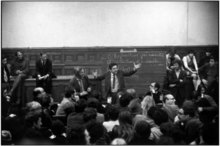 …waiting for the #Adjunct Town Hall witching hour to arrive, rummaging through the feed reader's daily (and older catch). Many we've read recently and were not new even then.
 Increasingly more stories make it out of the Ivory Silo™ niches of journals and higher ed media. Omnivore casts its nets widely: its briefly annotated, themed collections open a two-way window on academic culture in the media, lay bare higher ed "media creep."
I'm still waiting for coverage to include adjunct generated media. Until then, we do that for ourselves.
David A. Reidy (Tennessee): Social Justice, the University, and the Temptation to Mission Creep. From Class, Race, and Corporate Power, Thomas Breslin (FIU): Race, Class and the Promise of the Public University; and Ronald W. Cox (FIU): The Corporatization of Higher Education. Noam Chomsky on the death of American universities: As universities move towards a corporate business model, precarity is being imposed by force....The Wal-Mart-ization of higher education: Keith Hoeller on how young professors are getting screwed....
Not your dad's academy: Nick Kristof is wrong — professors are more relevant, accessible, and tech-savvy than ever before.Read the rest of not your dad's academy at Book Forum's Omnivore
Tuesday, July 30, 2013
the university & its challenges
Welcome to the Reading Room, briefly annotated links rounding up the usual higher ed suspects. Institutional pubs, UK and US press, journals and magazines weigh in on university culture, online education, open access, academic publishing, race, gender, movies, adjuncts (thank you, Omnivore!), graduate school, grim futures (so what else is new?) and so on...

Leon Botstein (Bard): Resisting Complacency, Fear, and the Philistine: The University and Its Challenges, The Hedgehog Review, Summer 2013. From Notre Dame Magazine, a special issue: Is college worth it? Male academics rarely suffer more than a bit of rudeness, but women have it far worse, according to Luke Brunning.
Sunday, June 2, 2013
Upton Sinclair's The Goose Step
… (1923) is about US #highered, early corporate influence ~ and extensively cited by Frank Donoghue in The Last Professors (our post here), pointing to parallels with Veblen and current concerns over corporatization. Donoghue does not share Hammermeister's dismissive and hypercritical attitude that, unfortunately, permeates other selections in the series, notably Ortega y Gasset.

Rereading the University Classics, Part 4 - The Chronicle of Higher Education

Editor's Note: This is the fourth in a monthly series intended to introduce new generations of faculty members and administrators to a core set of classic books about higher education and its institutions.The first three columns are here,here, and here.
There are two ways to ruin a university. The first is to submit it to the demands of industry and finance. That is the way that Upton Sinclair criticizes in his 1923 treatise, The Goose-Step: a Study of American Education. The other way is to hand it over to a revolutionary political agenda. That is the way that Sinclair advocates.
In his book on higher education, the self-confessed "socialist writer" Sinclair travels the country and visits colleges and universities. Every time he boards the train, he relates the overlap between the local railroad magnates and the board of trustees of the largest university in the region he's visiting. His conclusion: "Our educational system is not a public service, but an instrument of special privilege; its purpose is not to further the welfare of mankind, but merely to keep America capitalist."
Sunday, May 5, 2013
movie break
…now showing…last of the profs aka the great train wreck…still on topic…#academiclabor featuring the #adjunct as Gunga Din, post inspired by The Last Professors: The Corporate University and the Fate of the Humanities by Frank Donoghue, Fordham UP, 2008, the most recent entry in the Academe blog series, Reviews of Recent Books Concerning Current Issues in Higher Education,
Donoghue thinks (2008) it's too late to turn back and that we've already passed the tipping point. Asked at the beginning of the interview above to describe last profs in ten words or less, he replies, "a train wreck with no survivors."
Saturday, April 6, 2013
the university as we know it?
…briefly annotated articles from diverse sources (e.g. not just higher ed media) on academic news, trends and culture shamelessly reblogged from Book Forum's blog Omnivore (for the omnivorous reader, part of the academic job description, n'est-ce pas?). Neither unfamiliar topics nor adjuncts either today. Never disappointing, other themed collections cover politics, science, history, contemporary culture, philosophy, sundry topics from the Zeitgeist and more. perhaps a fresh perspective or so. Still, perhaps someone among us should drop Book Forum a thoughtful note about Omnivore's shameless neglect of the academic precariat? I'm game. Are you?

Eric Royal Lybeck (Cambridge): The Ideological Organization of University Systems: A Theoretical Framework. From The American Scholar, how to do what you do? Paula Marantz Cohen on how the life of a professor isn’t what it used to be. Smart, poor kids are applying to the wrong colleges: How an information mismatch is costing America’s best colleges 20,000 low-income students every year. Jordan Weissmann on how Washington could make college tuition free (without spending a penny more on education).
The online university of spam: Andrew Leonard on how a bizarre email from BachelorsDegreeOnline.com exposed the sleazy side of for-profit college recruitment. Does the rise of the “massive open online course” spell the end of the university as we know it? Keith Devlin on MOOCs and the problem with instructional videos. From TNR, will online education dampen the college experience?
the university as we know it? - bookforum.com / omnivore
Friday, March 8, 2013
no sanctuary in the ivory tower
 Jonathan Olson (FSU): The Quest for Legitimacy: American Pentecostal Scholars and the Quandaries of Academic Pursuit. From Journalist’s Resource, a research roundup on affirmative action in university admissions. Price of a bad review: A university librarian finds himself sued for questioning the quality of an academic press. Blow up Media Studies: Emma Park reviews Blow Up the Humanities by Toby Miller.
No sanctuary in the ivory tower: Why didn’t MIT defend Aaron Swartz? Chris Lehmann investigates.
Nicole Allan and Derek Thompson on the myth of the student-loan crisis: Are rising debt levels really a cause for national panic? The Dean of Corruption: Cecilia Chang, the St. John’s fund-raiser who committed suicide after her epic fraud was exposed, tried to keep her superiors happy with gifts of watches, vacations, custom suits, and fine wine — it worked, for a while.
no sanctuary in the ivory tower - bookforum.com / omnivore
Sunday, March 3, 2013
world university
…around the world & back again, money talks in all languages (the ultimate koine), online courses = global access but what outcomes?
 Abdulla Galadari (MIT): World University: Bringing Higher Education Closer to Humanity. From china.org, ranking of rich alumni triggers debate: The compiler of a controversial list of rich alumni said the ranking helps promote entrepreneurial education at universities. Michele Lamont and Anna Sun on how China's elite universities will have to change. A new Russian technical university has high aspirations.
On Her Majesty's scholarly service: For centuries Regius chairs were the gift of kings, tools of statecraft and the preserve of ancient universities — but that has changed, most recently with the addition of 12 new professorships, as Richard J. Evans relates. From Roar, Thomas Friedman may praise the emancipatory potential of online university courses, but are they really capable of producing more than docile workers?
world university - bookforum.com / omnivore
On Her Majesty's scholarly service: For centuries Regius chairs were the gift of kings, tools of statecraft and the preserve of ancient universities — but that has changed, most recently with the addition of 12 new professorships, as Richard J. Evans relates. From Roar, Thomas Friedman may praise the emancipatory potential of online university courses, but are they really capable of producing more than docile workers?
Friday, February 8, 2013
academe on the brink

- IRS weighing in on ACA and PTF workload (cadres of the unhappy no matter how it goes),
- Green River CC intra-union conflict (oh noes, not again, but yes: uglier, more divisive, increasingly less conducive to civil discourse + gratuitous sideswipes at NFM),
- @FutureofHE working papers on funding higher ed,
- rounding off with calls for papers and upcoming conferences with contingent faculty sessions, even whole conferences just for us.
So read on and enjoy. I'll do the same...
Thursday, January 31, 2013
a straight path into academia

Friday, December 28, 2012
universities are vast copy machines
 …linkalicious Omivore is back on the #highered beat in time for year end reflections, plus an informal tutorial by example on elegant link annotation. This O covers more than higher ed: its beat is global and eclectic: politics, science, culture. social sciences, economy, geopolitics, arts, law, ethics, and more…
From Boston Review, pomp and exceptional circumstance: Malcolm Harris on how students are forced to prop up the education bubble. What's your preferred way of finding a paper in your field? Scott McLemee looks at a report on the available options. Siva Vaidhyanathan on how universities are vast copy machines — and that’s a good thing.
Scholars say higher ed leftist bias helped Obama win. Are the liberal arts useful? Samuel Goldman wonders. Blaine Greteman reviews Speaking of Race and Class: The Student Experience at an Elite College by Elizabeth Aries with Richard Berman. Will state colleges become federal universities? Richard Vedder investigates. Students aren’t the only ones cheating — some professors are, too; Uri Simonsohn is out to bust them.
Robert Dingwall on why open access is good news for neo-Nazis. Questioning Clay Shirky: It's time to start challenging the popular critique of higher education — and the way the views of many academics have been belittled or ignored, writes Aaron Bady. From PhD Comics, Jorge Cham on the fingerprint of stars. A look at 5 mind-blowing academic theories as taught by classic movies.
universities are vast copy machines - bookforum.com / omnivore
Scholars say higher ed leftist bias helped Obama win. Are the liberal arts useful? Samuel Goldman wonders. Blaine Greteman reviews Speaking of Race and Class: The Student Experience at an Elite College by Elizabeth Aries with Richard Berman. Will state colleges become federal universities? Richard Vedder investigates. Students aren’t the only ones cheating — some professors are, too; Uri Simonsohn is out to bust them.
Robert Dingwall on why open access is good news for neo-Nazis. Questioning Clay Shirky: It's time to start challenging the popular critique of higher education — and the way the views of many academics have been belittled or ignored, writes Aaron Bady. From PhD Comics, Jorge Cham on the fingerprint of stars. A look at 5 mind-blowing academic theories as taught by classic movies.
Subscribe to:
Posts (Atom)
