
The current issue of Workplace: A Journal for Academic Labor has been updated with two new field reports.
Issue No. 17 of Workplace “Working In, and Against, the Neo-Liberal State: Global Perspectives on K-12 Teacher Unions” is guest edited by Howard Stevenson of Lincoln University (UK).
The new field reports include:
The NEA Representative Assembly of 2010: A Longer View of Crisis and Consciousness
Rich Gibson
Abstract
Following the 2009 National Education Association (NEA) Representative Assembly (RA) in San Diego, new NEA president Dennis Van Roekel was hugging Arne Duncan, fawning over new President Obama, and hustling the slogan, “Hope Starts Here!” At the very close of the 2009 RA, delegates were treated to a video of themselves chanting, “Hope starts Here!” and “Hope Starts with Obama and Duncan!” The NEA poured untold millions of dollars, and hundreds of thousands of volunteer hours, into the Obama campaign. In 2009, Van Roekel promised to tighten NEA-Obama ties, despite the President’s educational policies and investment in war. What happened in the year’s interim? What was the social context of the 2010 RA?
Resisting the Common-nonsense of Neoliberalism: A Report from British Columbia
E. Wayne Ross
Abstract
Faced with a $16 million budget shortfall, the Vancouver school trustees, who have a mandate to meet the needs of their students, have lobbied for more provincial funding to avoid draconian service cuts. The government has refused the request, and its special advisor to the Vancouver School Board criticizes trustees for engaging in “advocacy” rather than making “cost containment” first priority. The clash between Vancouver trustees and the ministry of education is not “just politics.” Rather, education policy in BC reflects the key features of neoliberal globalization, not the least of which is the principle that more and more of our collective wealth is devoted to maximizing private profits rather than serving public needs. British Columbia is home to one of the most politically successful neoliberal governments in the world, but fortunately it is also a place to look for models of mass resistance to the neoliberal agenda. One of the most important examples of resistance to the common-nonsense of neoliberalism in the past decade is the British Columbia teachers’ 2005 strike, which united student, parent, and educator interests in resisting the neoliberal onslaught on education in the public interest.
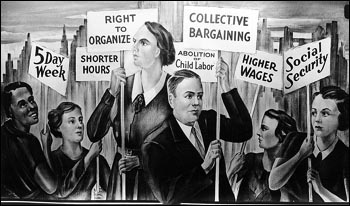 …an idea and article worth revisiting: a 2012 Dissent Magazine article by Century Foundation senior fellow Richard D. Kahlenberg and labor/employment discrimination attorney Moshe Z. Marvit, also authors of Why Labor Organizing Should Be a Civil Right: Rebuilding a Middle-Class Democracy by Enhancing Worker Voice.


